In brief
On an industrial site, access control protects people before it protects assets. This article covers the three challenges specific to industry, the particular requirements of explosive atmosphere (ATEX) zones, and the features that actually matter in a system — including the one most often overlooked: traceability.
In industry, the safety and efficiency of operations depend largely on the ability to manage and control access to sites and equipment. Whether the aim is to protect employees, secure assets or comply with regulations, industrial companies face these questions daily — all the more so as access is now physical, digital and interconnected at the same time.
The access control challenges specific to industry
Protecting people and infrastructure
Industry faces high safety risks every day, because of heavy equipment, potentially hazardous substances and restricted areas.
On that last point, an access control system restricts entry to authorised people only. The aim is to reduce unauthorised intrusion, the risk of accidents and equipment theft. It also protects employees from workplace accidents, by ensuring they do not enter areas they are not cleared for.
Managing access zone by zone
Access management on industrial sites usually has to be segmented by security zone. A plant may contain production areas, storage, laboratories and administrative offices, each with its own access requirements. An effective system must handle those differences, authorising only people qualified for a given zone.
Meeting regulatory requirements
Industrial companies are required to control access to their facilities as part of their wider duty to manage risk. Access control can no longer be limited to managing purely physical permissions: it belongs to an integrated approach combining physical and digital security.
National cybersecurity agencies recommend securing every critical component — badges, readers — to limit the risk of sabotage or tampering. Check the guidance published by the agency competent in your own country; in France, that is the ANSSI.
Focus on ATEX zones
ATEX zones (from ATmosphères EXplosibles) are areas where flammable gases, vapours, mists or dusts may be present, creating a potential explosion risk. They are classified according to how often and how long those substances are present — Zones 0, 1 and 2 for gases, Zones 20, 21 and 22 for dusts.
Access control in these zones must meet requirements beyond the usual standards, to avoid triggering an explosion. A system intended for ATEX zones must:
- Use explosion-proof materials — badges, readers and electronic locks must not generate sparks or excessive heat. ATEX-certified equipment is encapsulated to prevent any direct contact with the explosive atmosphere.
- Check operator qualifications and certifications — staff authorised to enter ATEX zones must hold the relevant qualifications, and the system must verify them in real time. This may call for coded electronic badges carrying each individual’s certification level, preventing anyone unqualified from entering.
- Provide real-time monitoring and automated alerts — sensors detecting variations in temperature or the presence of hazardous gases, raising an alert when thresholds are exceeded. Emergency protocols must be triggered immediately in the event of unauthorised access or an anomaly.
- Log access for rigorous safety audits — companies operating ATEX zones must be able to demonstrate the compliance of their access procedures. A detailed, time-stamped history of movements is essential to identify potentially risky behaviour and to follow up after an incident.
The features that actually matter
Multi-factor identification
To secure sensitive areas, industrial sites combine several means of identification: badges, access codes, biometrics (fingerprint, facial recognition) and video surveillance. Combining factors substantially reduces the risk of fraud or identity spoofing.
Working time and attendance management
Access control systems also manage schedules and track attendance. This is particularly useful for industries employing shift or rotating staff: beyond security, it simplifies human resources management.
Real-time control
Effective access control relies on real-time monitoring, with alerts on attempted intrusion or unauthorised access, so that security managers can intervene immediately. Real-time visibility also shows exactly who is in which area of the plant at any moment — which is essential in an emergency.
Access history and traceability
Recording access data is indispensable for safety audits. A system that keeps a detailed history makes it possible to retrace movements across the site, and to identify the actions and individuals concerned after an incident. That traceability also supports regulatory compliance and long-term monitoring.
Worth remembering: traceability is the feature most often overlooked at the specification stage, and the one most often needed after an incident. It is far easier to specify it up front than to retrofit it.
Recent developments in industrial access control
Artificial intelligence and predictive control
AI built into access control systems can analyse access behaviour and anticipate emerging threats. An algorithm can detect unusual movement patterns and raise an alert before an incident occurs, allowing a proactive response rather than a reactive one.
IoT and remote management
With the Internet of Things, access control systems can be managed remotely from connected devices such as smartphones or tablets. Security managers can monitor and manage access in real time without being physically on site — particularly useful for industrial sites spread over large areas, or for remote facilities.
ANAVEO: integrated solutions for industrial sites
ANAVEO offers industrial sites an integrated approach, with ZoneTracker for real-time intrusion detection and lone worker protection devices for staff working in isolation.
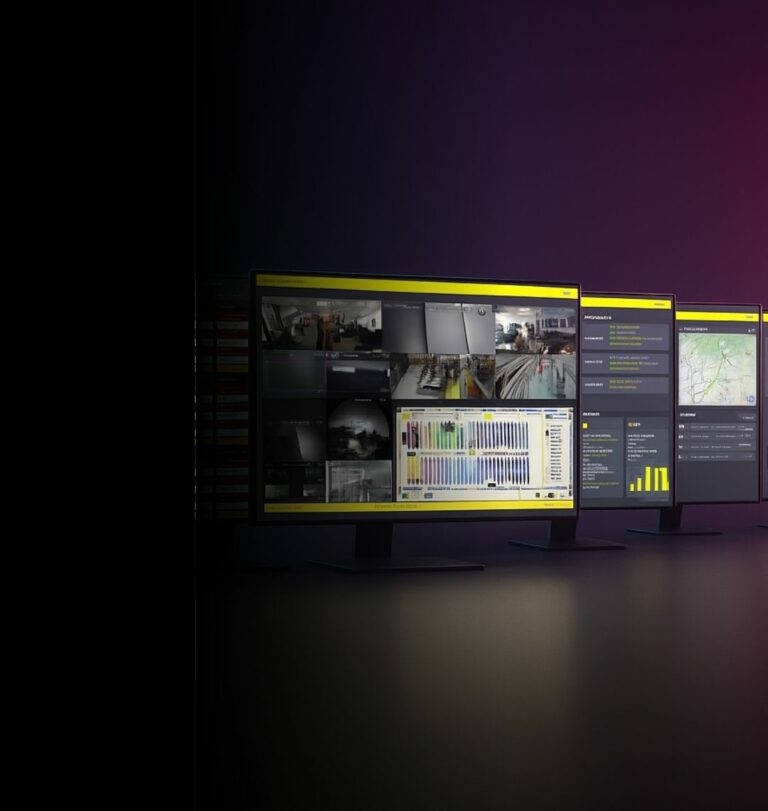
Through the INNOVEO platform, these tools are interconnected with access control and intelligent video surveillance, giving a complete view of site security. ANAVEO Mobile lets managers supervise their sites remotely from a smartphone.
NumberPlateTracker can additionally support vehicle flow management through licence plate recognition. Note that plate reading complements an access control system — it should not be the sole means of opening a barrier, and staff must be informed that the device is in place.
Frequently asked questions
What is an ATEX zone?
An ATEX zone is an area where flammable gases, vapours, mists or dusts may be present, creating a potential explosion risk. Zones are classified by how often and how long those substances are present: Zones 0, 1 and 2 for gases, Zones 20, 21 and 22 for dusts.
What does access control in an ATEX zone require?
Explosion-proof, ATEX-certified equipment that generates neither sparks nor excessive heat; real-time verification of operator qualifications; sensors and automated alerts on temperature or hazardous gas thresholds; and a detailed, time-stamped log of movements for safety audits.
Why segment access by zone on an industrial site?
Because a plant combines areas with very different requirements — production, storage, laboratories, offices. Segmenting means only people qualified for a given zone can enter it, which protects both the site and the employees themselves from entering areas they are not cleared for.
What is multi-factor identification in access control?
It is the combination of several means of identification — badge, access code, biometrics, video surveillance — rather than relying on a single one. Combining factors substantially reduces the risk of fraud or identity spoofing on sensitive areas.
Why does access traceability matter?
Because it allows movements across the site to be retraced, and the actions and individuals involved in an incident to be identified. It also supports regulatory compliance and safety audits. It is the feature most often overlooked at specification stage and the hardest to retrofit afterwards.
Review access control on your site
A conversation about your zones, your ATEX areas if you have any, and the traceability you can currently demonstrate.
Contact us