

In brief
On transport and logistics sites, the security project almost always starts after an incident — a theft in the yard, a night-time intrusion, a lone worker unable to raise the alarm. This article sets out the four zones to address on a logistics site, what a lone worker protection device is, and where to start without waiting for the next event.
There is one sentence we often hear at a first meeting, and it is nearly always said in the same tone: “Before, we had nothing.” Not an inadequate system: nothing. A fence, a gate, a light, and the confidence that not much ever happened.
Then something happens. Trailers opened overnight, fuel siphoned off, a pallet that disappears between the dock and the load, or — more seriously — a lone worker who is injured and whom nobody sees for two hours. That is where the security project is born.
It is human, but it is expensive. A project triggered by an incident is decided under pressure, with a budget settled in the heat of the moment and a scope defined by what has just happened rather than by what could happen. The same project, thought through calmly, costs less and covers more.
Why transport sites are particularly exposed
It is not a matter of negligence, but of shape. A logistics site combines four characteristics which, taken together, make it an easy target.
- An extended perimeter — long fence lines, several possible crossing points, and unlit areas that no one inventories until the day someone gets in.
- High-value goods in transit — merchandise that is present briefly, moves constantly, and whose disappearance is often only noticed downstream.
- Heavy rotation of external people — temporary staff and outside drivers whose access rights are handed out faster than they are withdrawn.
- Activity outside standard hours — early starts, late finishes and night operations, when the site is at its emptiest and least watched.
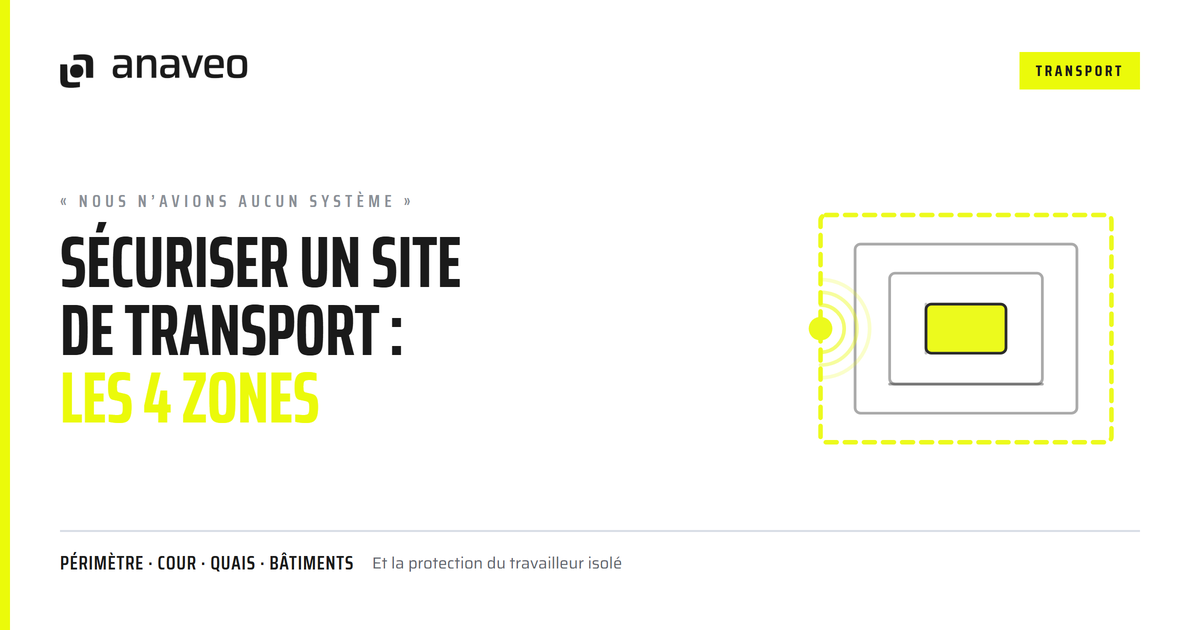
The four zones to address, in this order
1. The perimeter — detect before entry
This is the most cost-effective principle: trigger the alarm when someone approaches the fence, not when they are already inside the building. Infrared barriers, fence-line detection, video analytics for crossing events — the aim is to gain the few minutes that allow an alarm to be verified and a response organised before the theft is completed.
2. The yard and the vehicle park
This is the most attacked zone and the least equipped, because it is seen as a circulation area rather than an area to protect. It calls for video coverage designed for outdoor conditions at night, and for vehicle access control.
3. The loading docks
Docks concentrate internal risk: this is the point where goods change hands. Video here serves less to alert than to reconstruct — to find out what happened on a specific load, at a specific time. The ability to retrieve the right sequence quickly then matters more than the number of cameras.
4. Buildings and offices
Conventional intrusion detection and access control, with particular attention to badge management for temporary staff and external drivers, whose turnover is high.
Worth remembering: the order matters. Equipping the inside of a building before dealing with the perimeter amounts to installing a camera to film a theft you could have prevented.
Lone worker protection
A lone worker protection device is a piece of equipment carried by an employee working out of sight and out of earshot of colleagues. It raises an alert — automatically in the event of a fall or prolonged immobility, or manually by the worker — to a recipient able to organise assistance.
Lone working is not prohibited. What the law generally provides for is an employer’s overarching duty of care: the employer must assess risks — including lone working — and take appropriate measures. That assessment is recorded in the organisation’s risk assessment record. A protection device is the most common technical answer when the way work is organised does not allow isolation to be removed altogether.
The precise obligations are national, not European: in France they derive from the Labour Code and are recorded in the document unique d’évaluation des risques professionnels. Check the requirements applicable in your own country before defining your arrangements.
In practice, on a logistics site, the situations that come up most often are starting a shift before the team arrives, finishing after they leave, and work in cold storage or at height. Those three windows are the ones to examine first.
From the first site to the tenth: what changes
One transport group we support is now on its tenth equipped site. What led it to unify was not a security problem but an operational one: ten sites means ten interfaces, ten access logics, ten points of contact, and nobody able to say in one minute what is happening across the estate.
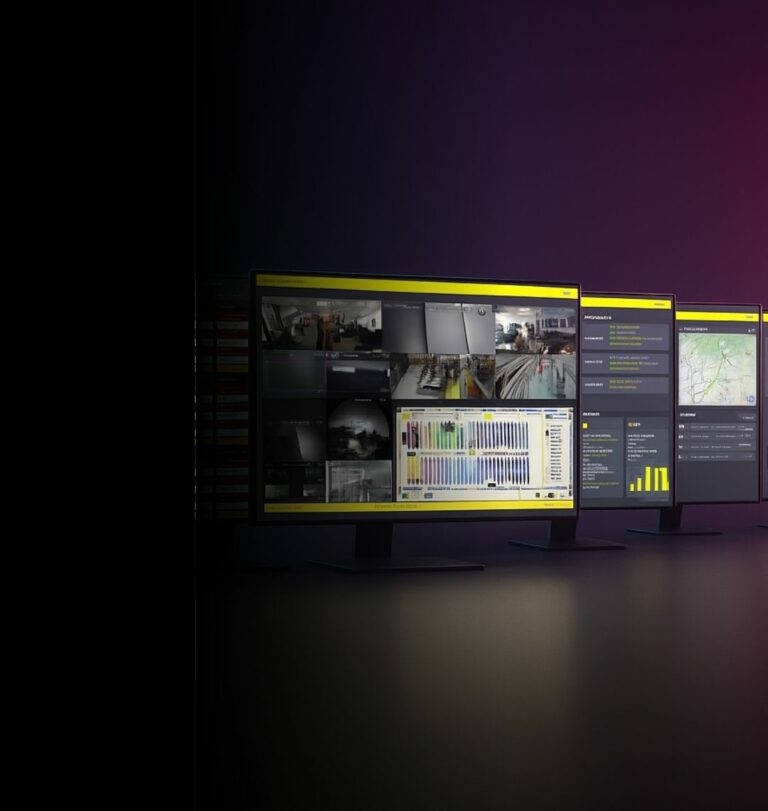
Scaling up changes the nature of the need. On one site, you are trying to protect. On ten, you are trying to operate: see alerts from every site in the same place, apply an access rule across the whole network in a single action, and compare sites with each other to spot the one triggering abnormally.
That is why we advise choosing a single supervision platform from the second site onwards, rather than adding up standalone installations. The extra cost is small at the outset; retrofitting is expensive.
Where to start without waiting for the incident
Four actions that require no capital budget and can be carried out internally:
- Map the real perimeter — fence length, possible crossing points, unlit areas. Many sites discover an access point they had forgotten at this stage.
- List lone working situations — by time slot and by role, in your risk assessment record.
- Test the existing alert chain — if an alarm goes off tonight at 2 a.m., who is notified, how quickly, and what does that person do? The answer is often vague.
- Check contract end dates — expiry, notice periods, equipment leased or owned. This is the data that governs any takeover schedule.
That last action deserves a word. On transport sites, the existing installation is rarely non-existent: it is heterogeneous, built up by sedimentation, with contracts signed on different dates. Unifying does not mean replacing everything — it means taking over each contract as it falls due and keeping the equipment that still does its job.
Frequently asked questions
What is a lone worker protection device?
It is equipment carried by an employee working out of sight and out of earshot of colleagues. It raises an alert to a recipient able to organise assistance, either automatically in the event of a fall or prolonged immobility, or manually by the worker.
Is a lone worker protection device a legal requirement?
Lone working is not prohibited, and no text names a specific device as mandatory. However, the employer has an overarching duty of care: the risk associated with lone working must be assessed and appropriate measures taken. Where the organisation of work does not allow isolation to be removed, a protection device is the most common technical answer. The precise obligations are national — check the rules applicable in your country.
Where should you start when securing a logistics site?
With the perimeter. Detecting a fence crossing leaves time to verify the alarm and respond before the theft is completed. Equipping the inside of the building before the perimeter amounts to filming a theft you could have prevented.
From how many sites is a single supervision platform worth it?
From the second. On one site the challenge is to protect; across several, it is to operate — seeing every alert in one place and applying an access rule across the whole network. The extra cost of a single platform is small at the outset; retrofitting standalone installations later costs considerably more.
Does an existing installation have to be replaced?
Largely not, in most cases. Transport site installations are generally heterogeneous rather than obsolete. A preliminary inventory separates equipment worth keeping from equipment to replace, and current contracts are taken over as they fall due, site by site, without interruption of service.
Take stock before the incident
A conversation about your perimeter, your lone working situations and your contract end dates.
Contact us