

Digital transformation has made cybersecurity an issue that reaches far beyond the IT department. It bears directly on business continuity, reputation, regulatory compliance and the legal liability of organisations. This article expands on the themes covered in our LinkedIn carousel and sets up a series of more detailed pieces to come.
1 · Digital security: an issue that has become systemic
Long confined to “tech”, digital security is now a strategic subject for every organisation. Cyberattacks and data breaches cost millions and undermine trust. Beyond protecting data, cybersecurity is a guarantee of service continuity and of compliance with legal obligations. European regulation — whether the GDPR for data protection or directives such as NIS 2 and DORA for essential services — places security at the heart of governance. In this complexity, standards and regulatory frameworks are no longer “brakes”, but compasses guiding organisations towards responsible practice.
2 · Regulation and standards: what are we actually talking about?
The legal landscape of cybersecurity combines regulations (binding law) and standards (voluntary frameworks that often become market expectations). Regulations impose legal obligations:
- GDPR: protection of personal data and the fundamental rights of individuals. In France, it is enforced by the CNIL, the national data protection authority; every EU member state has its equivalent.
- NIS 2: a European directive requiring member states to define national strategies, to impose risk management measures and to widen the scope to 18 critical sectors. It sets notification obligations and makes senior management accountable in the event of non-compliance.
- DORA: the regulation on digital operational resilience in the financial sector. In force since 17 January 2025, it harmonises IT risk management rules and requires financial entities to be able to withstand, respond to and recover from ICT-related disruption.
Standards, such as the ISO 27000 series, provide frameworks of good practice. They are voluntary, but often become a prerequisite for being shortlisted by customers or insurers. They structure processes and reassure stakeholders.
3 · ISO 27001: a pillar of modern cybersecurity
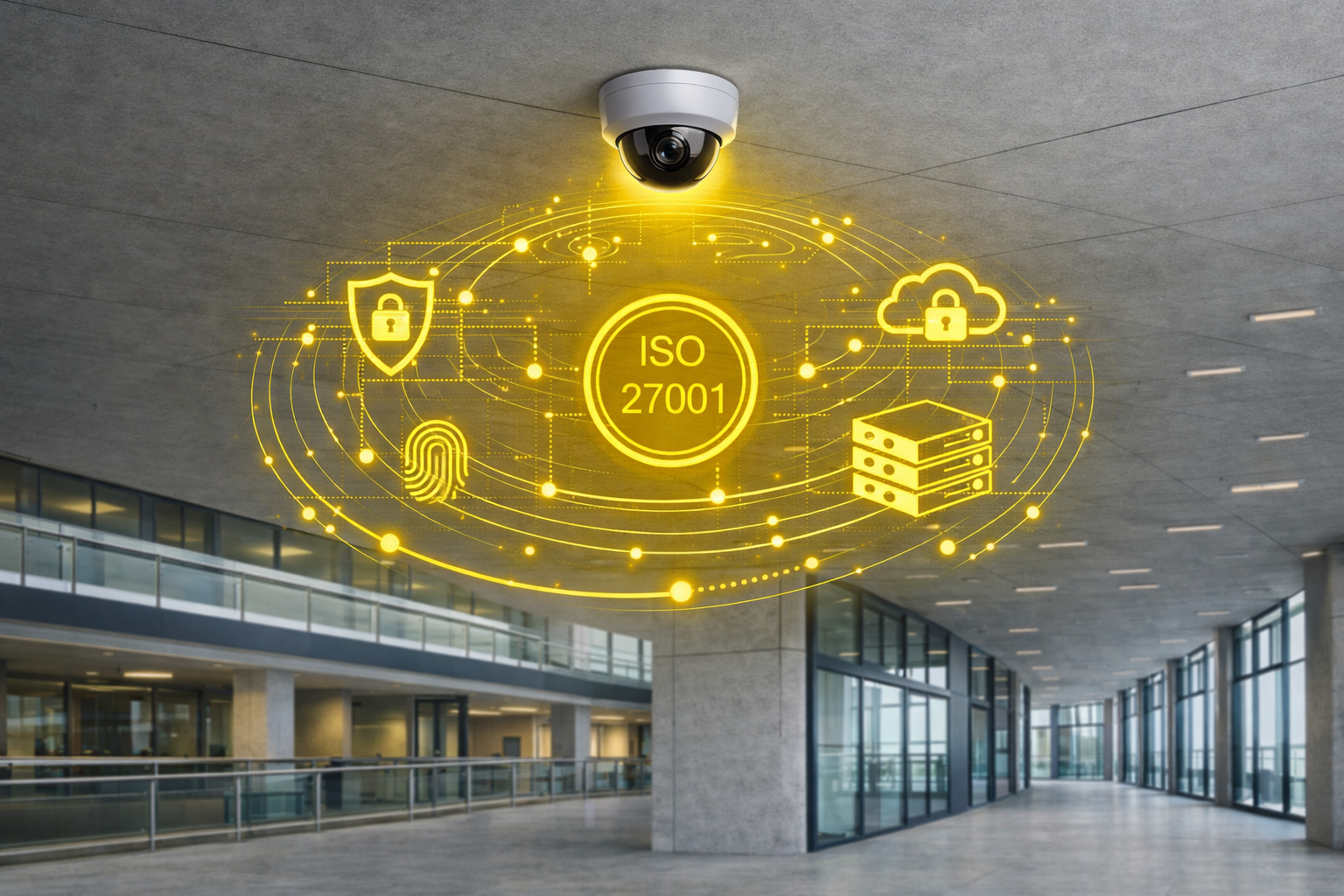
ISO/IEC 27001 is the international reference standard for information security management systems (ISMS). It provides a framework for establishing, implementing, maintaining and continually improving a security management system. This holistic approach covers people, policies and technology, and helps organisations identify and manage information security risks.
Why ISO 27001 matters
The standard applies to organisations of every size and in every sector. It ensures:
- structured security governance: roles, responsibilities and policies are defined;
- a documented risk analysis: threats and impacts are identified so that measures can be matched to them;
- proportionate measures: access control, encryption, monitoring, traceability;
- continual improvement: performance is reviewed and adapted to new risks.
These principles strengthen resilience against cyberattacks, ensure the integrity and availability of data, and provide evidence of compliance to customers and partners. Contrary to a common belief, ISO 27001 does not promise “zero risk”: it demonstrates an organisation’s ability to control its risks and to keep improving.
4 · Cybersecurity: far more than tools
Reducing cybersecurity to installing a firewall or an antivirus is a common mistake. Experts agree that security cannot be solved by technology alone. It rests on a balance between people, processes and tools. A holistic approach takes into account:
- People: employee awareness and training are the first line of defence. Trained staff can spot phishing attempts and apply good practice;
- Processes: clear procedures (SOPs, incident response plans) ensure an organised reaction when an incident occurs;
- Technology: effective tools (strong authentication, encryption, monitoring) are essential — provided they are integrated and regularly updated.
Organisational culture and leadership commitment play a crucial role: leaders must set the example, review security policies regularly and encourage staff to report suspicious behaviour. Ignoring any one of the three pillars — people, processes or technology — creates gaps that can be exploited.
Day to day, this means practices such as fine-grained access management (SSO, MFA), logging and traceability of actions, securing network flows, protecting sensitive data and responding quickly to incidents. Effective cybersecurity is often invisible… until the day it prevents a crisis.
5 · ISO 27001 and regulation: a common foundation
ISO 27001 does not replace laws such as the GDPR, but it makes compliance easier. Both frameworks pursue similar objectives: protecting the confidentiality, integrity and availability of data — the CIA triad. The GDPR and ISO 27001 both call for risk assessments, strict access controls, an incident response plan and employee training. The GDPR imposes legal obligations and penalties for non-compliance, while ISO 27001 provides the method and the technical controls to meet them.
In practice, a management system aligned with ISO 27001 is a solid foundation for managing data security and for demonstrating due diligence in an audit or a data protection impact assessment (DPIA). It supports the documentation supervisory authorities expect, and reduces the cost of compliance by structuring the work.
6 · Why this matters to businesses right now
Businesses are no longer isolated islands: they run multiple sites, remote users, cloud and edge computing, and intelligent video surveillance. They deploy AI applications and connected devices, host data platforms and work with many partners. The smarter the systems, the more essential it becomes to secure them.
Regulation reflects that reality. The NIS 2 directive extends cybersecurity obligations to new sectors — providers of public electronic communications services, waste, critical manufacturing, postal services, central and local government, the space sector and more — and imposes risk management measures and notification duties on all medium and large entities. It also makes senior management accountable for failures. Likewise, DORA requires financial institutions to demonstrate their ability to withstand and recover from ICT disruption, including by overseeing third-party providers and testing their resilience regularly.
In that context, not all solutions are equal. Some companies position themselves as trusted players by building compliance into the heart of their offer. ANAVEO designs, develops and deploys its electronic security solutions within a demanding regulatory, normative and ethical framework. In practice, that means:
- APSAD certification and alignment with the ISO 27000 series;
- commitment to PERIFEM and founding membership of the French collective for responsible video surveillance;
- data sovereignty and made-in-France cybersecurity: data hosted and processed locally;
- GDPR compliance and adherence to the requirements of the CNIL, the French data protection authority;
- support with data protection impact assessments and, in France, with the prefectural authorisations required for sensitive installations.
7 · Towards responsible digital security
Digital security is not a matter of ticking regulatory boxes. It is part of a wider commitment to responsibility:
- Data sovereignty: keeping control of where data is hosted and processed, to preserve its confidentiality and integrity;
- Privacy: respecting the fundamental right to data protection and building privacy in from the start (privacy by design);
- Responsible innovation: developing technologies — AI, intelligent video surveillance, biometrics — with an eye on social acceptability and ethics;
- Environmental responsibility: optimising the energy consumption of digital infrastructure and extending the working life of equipment.
8 · Conclusion
In a hyperconnected world, compliance is no longer optional: it is the precondition of trust. European regulations and international standards offer bearings for building systems that are secure, resilient and responsible. ISO 27001 provides a proven method for managing risk and structuring security, while the GDPR, NIS 2 and DORA set an increasingly demanding legal framework. Cybersecurity is built where people, processes and technology meet.